
LANXESS launches eco-friendly CAB 30 calcium sulfate binder

- Environmental Product Declarations confirm the biological safety of the binder
- Sustainable and efficient: Calcium sulfate screeds based on LANXESS anhydrite binder CAB 30
- Additive Mebofix pro: faster drying and lower water consumption
- EPDs provide data basis for ecological assessment of construction projects
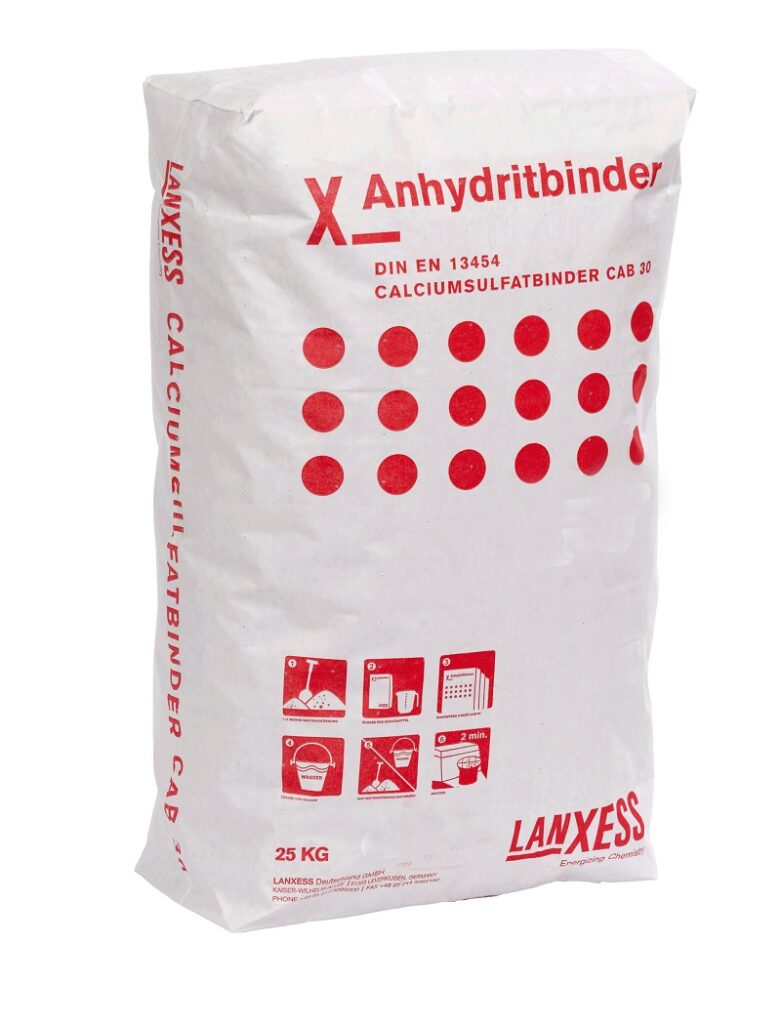
With the calcium sulfate binder CAB 30, LANXESS offers processors and builders a low-emission, building biology-tested anhydrite binder. CAB 30 meets the highest environmental standards and is ideally suited for the implementation of eco-efficient construction projects. The specialty chemicals company has now received Environmental Product Declarations (EPDs) from the Institute Bauen und Umwelt e.V. (IBU, Institute for Construction and Environment) for its binder and its use in conventional calcium sulfate screeds. These confirm the low carbon footprint of both the binder and the conventional calcium sulfate screed produced from it. It also meets the requirements for volatile organic compounds (VOC) and is safe in terms of building biology. It is therefore permitted to carry the eco-label. CAB 30 is standardized according to DIN EN 13454.
Emission tests prove that the emission values of the calcium sulfate binder meet the requirements of the Committee for Health Assessment of Building Products (AgBB). In addition to the AgBB tests, the product has received further positive assessments, e.g., in accordance with the Belgian VOC regulation. CAB 30 has also been awarded the “Emissions dans l’air intérieur A+” seal of approval in France for very low indoor air emissions – even when used in combination with additives such as Mebonit pro or Mebofix pro.
Mebofix pro: faster drying and higher strength
Calcium sulfate screeds based on LANXESS anhydrite binder CAB 30 offer numerous ecological and practical advantages over traditional cement screeds. They can be applied over large areas without joints or reinforcement. The Mebofix pro drying accelerator developed by LANXESS significantly reduces the amount of water required when mixing screed mortar and considerably shortens drying times – saving resources and speeding up the construction process. The additive enables the screed mortar to be mixed with considerable less water without affecting the usual consistency. On the contrary: a lower water content makes the screed more robust and improves its compressive, flexural and surface strength. The result is impressive in terms of ecological efficiency, with a significantly better emissions balance on the construction site.
EPDs: A transparent basis for sustainable construction
More than ever before, the construction industry is faced with the task of combining sustainability and efficiency. For construction companies, architects, engineers, and builders, an independent, scientifically based assessment of the building materials used, from raw material extraction to disposal, is becoming increasingly important.
EPDs are internationally recognized as a key tool for ecological assessment and ensure transparency and comparability of construction products. They also serve as an important data basis for certification systems in the field of sustainable construction. Furthermore, EPDs strengthen the market position of manufacturers and are often a prerequisite for participating in public tenders or subsidy programs.
LANXESS has received EPDs for its calcium sulfate binder CAB 30 and for its use in conventional calcium sulfate screed. This makes CAB 30 particularly suitable for sustainable construction projects and buildings with high eco-efficiency requirements, such as green building projects.

