

Viceroy Properties | A Larger Canvas for Luxury in Versova
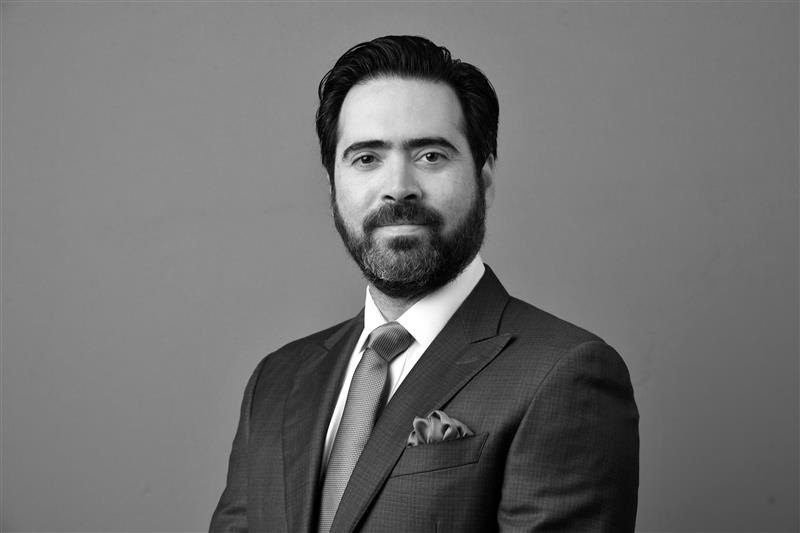
“Mumbai’s real estate story is constantly being rewritten, but only a few locations get the chance to turn a long-standing promise into a new growth story. Visava, the latest residential project by Viceroy Properties in Versova, is positioned around precisely this opportunity. Located close to the Coastal Road’s Versova connection, the project brings together large-format residences, expansive views and a premium residential proposition in a micro-market that is witnessing renewed interest. Cyrus Mody, Founder, CEO and Managing Partner, Viceroy Properties, shares his perspective on why Versova is at an inflection point, how Visava is redefining luxury and what lies ahead for Mumbai’s real estate market.”

Visava comes at an interesting juncture for Versova. What attracted Viceroy Properties to the location, and how does the project reflect the character of the neighbourhood?
Visava represents a rare opportunity in Mumbai—a sizeable greenfield development in the heart of Versova, located almost where the Coastal Road touches down. This connectivity has changed the game for the micro-market, bringing Nariman Point within around 10 minutes and Bandra within approximately five minutes. For the last 10–15 years, Versova saw limited new development, largely because infrastructure had not caught up with its potential. Today, that equation is changing, and we believe the market is at an inflection point. What makes Versova particularly compelling is that, despite its improved connectivity, it has retained its distinct character, with the beach, mangroves, open spaces and a cosmopolitan community that includes professionals and people from the entertainment and media industries. Visava has been conceived to complement this setting rather than overpower it. Even the name, which has its roots in the local Koli community and means a place of rest, reflects this philosophy. We see an opportunity to create a refined residential environment that combines luxury and space while retaining the natural and cultural essence of Versova. It is a location where connectivity has finally caught up with potential.
When the word ‘luxury’ is used so frequently in real estate, how did you arrive at your own definition of luxury for Visava?
We went back to basics and asked ourselves what luxury should mean in this particular micro-market. We studied the existing residential landscape and realised that people here are already accustomed to living in large apartments. So, if we wanted to create something genuinely differentiated, we had to raise the bar on space, planning and quality. Visava is spread across approximately two acres and offers three- and four-bedroom residences, along with limited larger configurations. The four-bedroom residences are close to 3,000 sq. ft., while the three-bedroom homes are approximately 2,000 sq. ft. We are also offering generous ceiling heights, large windows and views towards the surrounding landscape. For us, luxury is not about ticking boxes on an amenities list; it is about getting the fundamentals right and making everyday living feel exceptional.
With technology changing rapidly, what do you believe will define luxury homes over the next decade?
Technology will certainly become more integrated into homes, but I don’t think it will be the sole yardstick of luxury. Real estate has a much longer shelf life than most products. A building designed today may be delivered five years later and remain relevant for the next hundred years. So, future-proofing is critical. In my view, certain fundamentals will never go out of fashion—space, natural light, privacy, good views, ceiling heights and construction quality. Technology will evolve, but these elements will remain the backbone of luxury. At the end of the day, bells and whistles can change, but the fundamentals have to stand the test of time.
As more developers enter emerging micro-markets, do you see the definition of luxury becoming more competitive?
Absolutely. Luxury is not a static concept; it moves with the market. When we planned Visava, there was very limited new development in Versova, which gave us the opportunity to think differently about apartment sizes and planning. As more developers enter the market and competition increases, the economics of development naturally change. It may become more difficult to build apartments of this scale in the future. So, in a sense, scarcity itself can become a part of luxury. What is difficult to replicate tomorrow can become a significant differentiator today.
Viceroy Properties is also looking at commercial development. How important will this segment be in your growth strategy?
Commercial real estate is an important part of our future plans. We have close to 1.5–2 million sq. ft. of commercial space planned across Mumbai, predominantly in the western suburbs, covering different micro-markets from Borivali to Andheri. Our current focus is on commercial office developments. Data centres are an interesting segment, but they require very specific infrastructure, large parcels of land and typically low-rise formats, making them less suited to the heart of Mumbai. For now, our focus is clear—we want to build our presence across luxury residential and commercial office real estate and pursue opportunities where we see strong long-term fundamentals.
With the RBI maintaining the repo rate, how do you see the current interest-rate environment influencing the real estate market?
We see stability in interest rates as a positive signal for the sector. There were expectations that rates could continue moving upwards, particularly amid global uncertainties and concerns around oil prices and inflation. That has not played out in the way many anticipated. For homebuyers, stable interest rates bring greater confidence to the decision-making process, while for developers they provide better visibility for planning and execution. So, rather than seeing the current environment as a headwind, we see it as a reasonably supportive backdrop for the real estate market.
Looking ahead, what is the larger vision for Viceroy Properties as Mumbai enters its next phase of growth?
We are very excited about Visava because we believe it represents the coming together of location, infrastructure and a differentiated product. But we are not looking to chase growth for growth’s sake. Our approach is to identify the right opportunities, understand the micro-market and then create a product that has a clear reason to exist. Mumbai is a city where the right infrastructure can change the fortunes of an entire neighbourhood, and Versova is a good example of that. We believe the best projects are those where the fundamentals do the talking. Visava is one such opportunity, and we look forward to building on this momentum across Mumbai.

