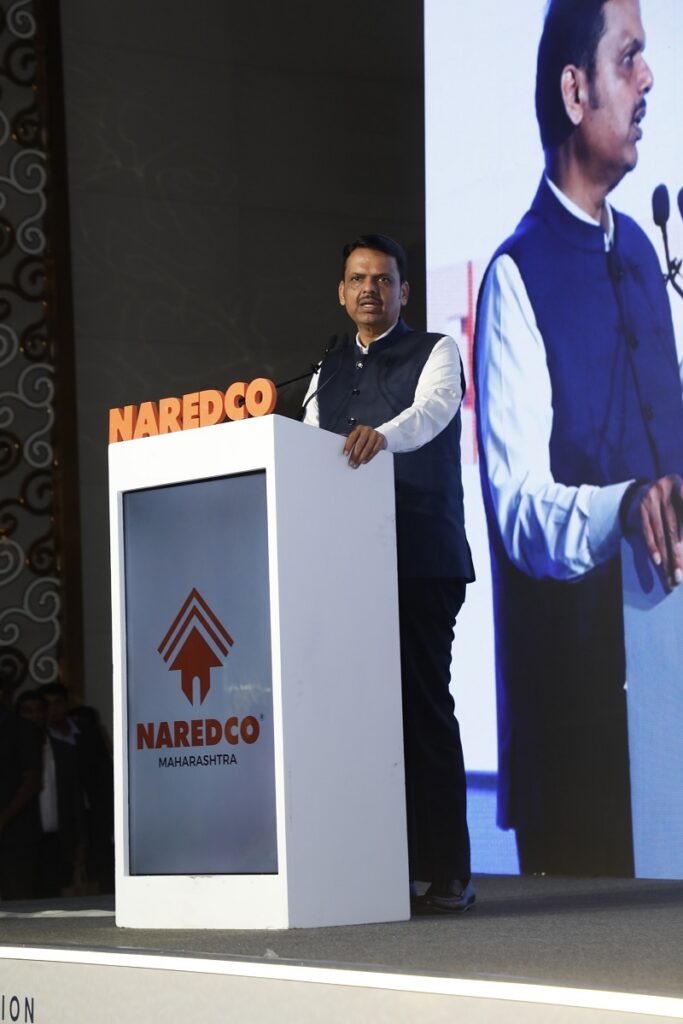
Maharashtra is entering a new phase of accelerated urban and economic development, with large-scale redevelopment, infrastructure expansion, new economic corridors and technology-led governance set to transform Mumbai and the wider metropolitan regions of the State, said Shri Devendra Fadnavis,Chief Minister of Maharashtra.
The Chief Minister was speaking at the 6th Edition of Real Estate & Infrastructure Investors’ Summit – REIIS 2026, held in Mumbai today, where he outlined the State Government’s long-term development vision and invited the real estate and infrastructure industry to become a key partner in its execution.
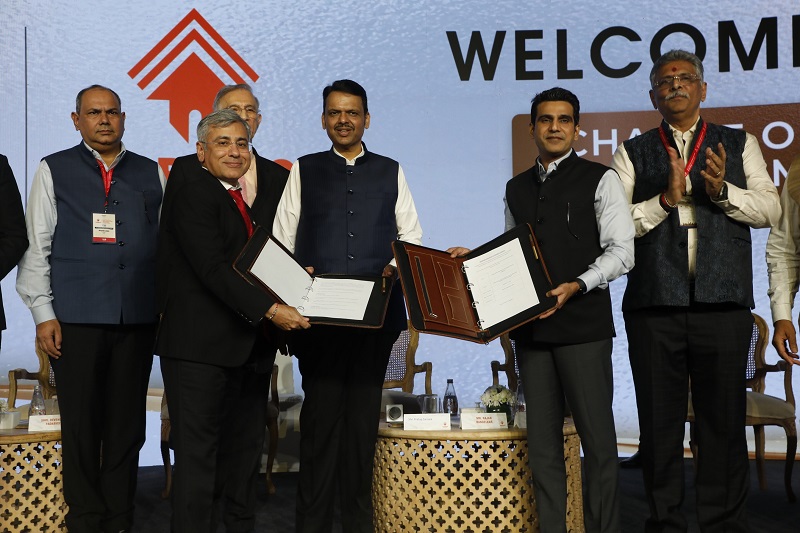
Fadnavis also unveiled the logo of ‘Naveen Nagpur’ (New Nagpur), the project initiated by NMRDA (Nagpur Metropolitan Regional Development Authority). NAREDCO Maharashtra signed a Memorandum Of Understanding (MoU) with NMRDA in the presence of Mr. Sanjay Meena, IAS, Metropolitan Commissioner, NMRDA.
Highlighting Maharashtra’s experience with regulation, the Chief Minister said, “Maharashtra was the first State to have a regulator. The Government worked with the developers’ fraternity and today Maharashtra has the most successful regulator in India. The trade has been cleaned up and a level playing field has been created,” he said.
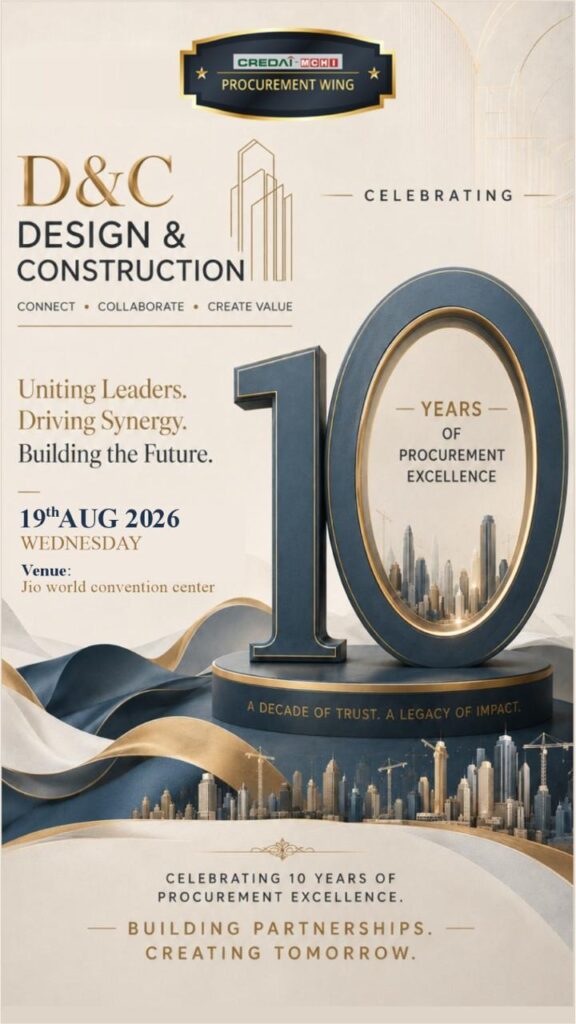
Under the leadership of Mr. Sukhraj Nahar, President, CREDAI-MCHI, the apex body of real estate developers in the Mumbai Metropolitan Region (MMR), the association is set to host the 10th Anniversary Edition of the CREDAI-MCHI Design & Construction Conference 2026 on Wednesday, 19th August 2026, at the Jio World Convention Centre, Mumbai. The landmark edition will bring together over 500 procurement leaders, construction heads, architects, consultants, and senior decision-makers from the real estate industry, along with 50+ leading construction and ancillary brands. The conference will feature product launches, technology showcases, knowledge sessions on emerging industry trends, strategic B2B networking opportunities, and recognition of procurement professionals who have played a pivotal role in transforming the construction ecosystem, while celebrating a decade of the CREDAI-MCHI Procurement Wing.
Established in 2016, the CREDAI-MCHI Procurement Wing was created with a vision to build a collaborative platform connecting developers with the ancillary industry, while promoting innovation, knowledge sharing, and strategic partnerships across the procurement and construction ecosystem.
Over the past decade, the CREDAI-MCHI Procurement Wing has emerged as a catalyst for collaboration and innovation within the real estate industry. Through pioneering initiatives such as BizNet, WeConnect, Pitch to BizNet, X-clusive, Buildverse, and the Spaciux Awards, the wing has consistently brought together developers, procurement leaders, architects, consultants, manufacturers, contractors, and solution providers to strengthen industry partnerships and shape the future of procurement and construction.
As CREDAI-MCHI commemorates this remarkable journey, the 10th Anniversary Edition of the Design & Construction on on 19th August 2026 at the Jio World Convention Centre, Mumbai promises to be its biggest and most impactful edition yet.
The event will also honour the remarkable work carried out by the members of the CREDAI-MCHI Procurement Wing under the leadership of Mr. Nimish Ajmera, Convener – CREDAI-MCHI Procurement Wing, whose vision and dedication have helped build one of the industry’s most respected procurement platforms.
In today’s rapidly evolving construction landscape, procurement has emerged as one of the most strategic functions within real estate development. Beyond sourcing materials, procurement professionals play a critical role in driving quality, cost optimisation, timely project execution, technology adoption, sustainability, and supply chain resilience.
As construction methodologies continue to evolve, procurement leaders have become key decision-makers who influence project quality, operational efficiency, innovation, and long-term value creation. Their expertise enables developers to adopt advanced construction solutions while delivering projects that meet the highest standards of quality and efficiency.
The 10th Anniversary Edition will bring together over 50 leading construction and ancillary brands under one roof, along with more than 500 procurement heads, directors, architects, consultants, and senior decision-makers from the real estate industry. The conference will provide a platform for meaningful business networking and B2B engagements, while showcasing the latest construction technologies, innovative products, and industry solutions. Attendees will also benefit from knowledge sessions focused on emerging trends, innovation, and sustainable construction practices. Marking a decade of the CREDAI-MCHI Procurement Wing, the event will celebrate 10 years of procurement excellence, recognize procurement leaders and industry professionals driving transformation in the sector, and serve as a launchpad for several leading brands to unveil their latest products, cutting-edge technologies, and industry-first solutions.
As the industry comes together to celebrate A Decade of Procurement Excellence, the conference stands as a testament to the vital role procurement plays in shaping the future of construction and infrastructure development. More than just an industry gathering, it is a celebration of collaboration, innovation, technology, and the partnerships that continue to transform India’s real estate and construction ecosystem.
The event was Inaugurated by the Hon’ble Chief Minister of Madhya Pradesh, Dr Mohan Yadav. He highlighted the Madhya Pradesh growing role in attracting industrial investment and advancing manufacturing-led development. He praised LiuGong’s pioneering efforts in making India a leader in sustainable Green Energy.
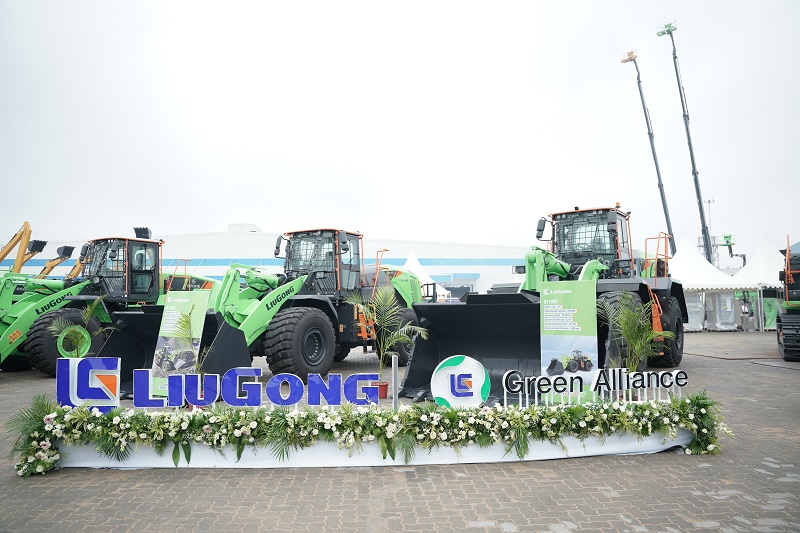
LiuGong India’s expansive manufacturing campus in Pithampur, witnessed a landmark moment for India’s construction equipment industry. The atmosphere was filled with anticipation as customers, channel partners, infrastructure developers, industry leaders, government dignitaries, and LiuGong’s global leadership come together to mark the inauguration of the company’s new state-of-the-art manufacturing facility.
The newly commissioned plant reflects LiuGong’s long-term confidence in the Indian market and reinforces its strategic focus on expanding local manufacturing under the Government of India’s ‘Make in India’ initiative. Equipped with advanced manufacturing technologies and modern production systems, the facility is expected to enhance LiuGong’s ability to meet the growing demands of the infrastructure, mining, road construction, and material handling sectors, while also strengthening the company’s existing base in India.
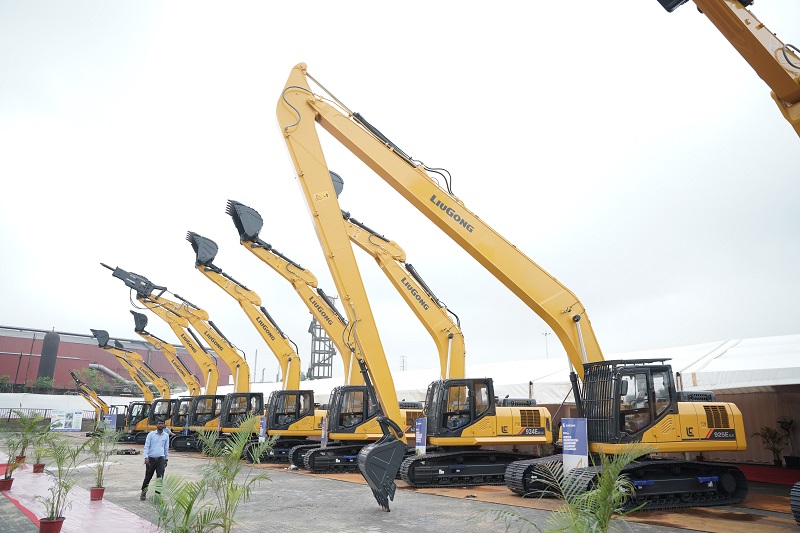
A major highlight of the event is the impressive display of more than 100 LiuGong machines, showcasing the company’s comprehensive portfolio across Excavators, Wheel Loaders, Motor Graders, Compactors, Skid Steer Loaders, Mining Equipment, Aerial Work Platforms, Material Handling Solutions and most importantly the wide range of Electric Vehicle Solutions. Visitors from across the country experienced the equipment firsthand while engaging with LiuGong’s product specialists and engineering teams.
The excitement intensified with the much-anticipated Machine Ramp Walk, where LiuGong’s latest generation of construction equipment took centre stage in a synchronized showcase of engineering excellence. This event also emphasised on the ability of Liugong Machines operated under simulated job-site conditions, demonstrating their performance, productivity, fuel efficiency, operator comfort, and advanced technological capabilities.
Senior leaders from LiuGong’s global management team addressed the gathering, sharing the company’s long-term vision for India, localisation strategy, manufacturing expansion plans, technological advancements, and continued commitment to delivering world-class construction equipment designed for Indian operating conditions.
Throughout the day, the venue served as a dynamic platform for contractors, fleet owners, infrastructure developers, mining companies, dealers, financial institutions, and other industry stakeholders to network, exchange insights, and interact with LiuGong’s leadership and technical experts.
The inauguration comes at a time when India’s infrastructure sector is experiencing unprecedented investment across highways, railways, mining, urban infrastructure, ports, renewable energy, and industrial development. The commissioning of this advanced manufacturing facility is expected to further strengthen the country’s construction equipment ecosystem by promoting localisation, creating employment opportunities, enhancing manufacturing excellence, and supporting India’s vision of becoming a global manufacturing hub.
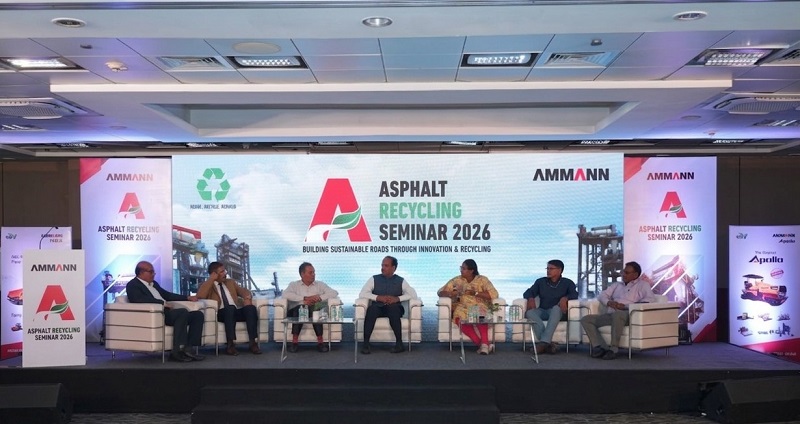
Ammann India, a leading manufacturer of road construction equipment and the only company in India offering up to 60% advanced asphalt recycling solutions, hosted a seminar on “Recycling Technologies in Road Construction” at Novotel Hi Tech City, Hyderabad.
The seminar brought together over 70 delegates from 35 organisations representing the road construction, infrastructure, research, and policymaking ecosystem. The discussions focused on how recycling technologies can help improve resource efficiency, reduce project costs, and support sustainable road development in India.
With material costs continuing to rise and sustainability becoming a key priority for infrastructure projects, the event provided a platform for industry experts to exchange insights on the wider adoption of Reclaimed Asphalt Pavement (RAP) and other recycling technologies.
The seminar featured presentations from industry and academic experts, including Mr. Prasad Dayal, General Manager, Ammann India, Mr. Martinho J. Fernandes, Assistant Vice President and Product Head, Asphalt Plants, Ammann India, Dr. Dharamveer Singh, Professor at IIT Bombay, Dr. Manoranjan Parida, Former Director, CSIR-CRRI, Dr. Ramya Sri Mullapudi, Assistant Professor, IIT Hyderabad, and Mr. Rajesh Kumar Pandey, Independent Director, Vertis Infrastructure Trust. The sessions explored a range of topics related to sustainable road construction, including asphalt recycling technologies, high RAP utilisation, pavement recycling practices, rejuvenator technologies, evolving policy frameworks, and the future of asphalt recycling in India.
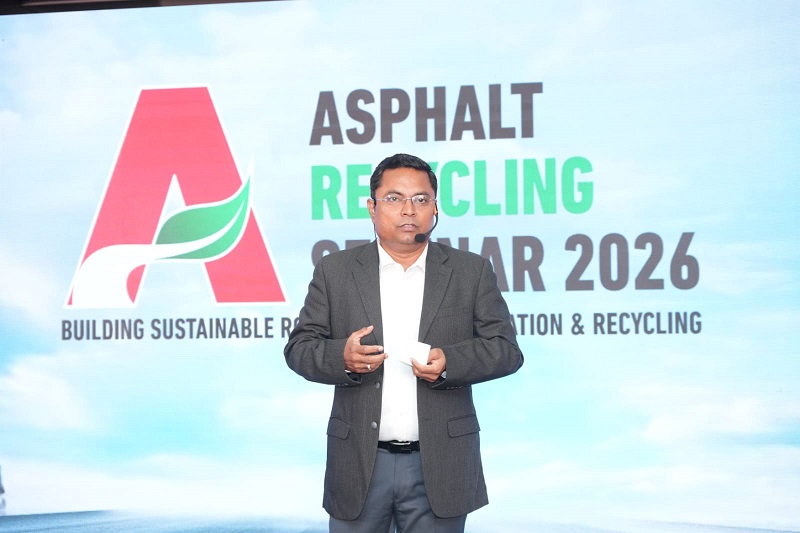
Addressing the gathering, Mr. Dheeraj Panda, Managing Director, Ammann India, said, “The defining question for India’s road construction industry over the next decade will not be how much infrastructure we build, but how much value we can create while consuming fewer virgin resources. The industry’s competitive advantage will increasingly come from innovation, circularity, and technology-led resource optimisation. Solutions such as Reclaimed Asphalt Pavement (RAP) represent a fundamental shift in how we think about road assets as resources which can be renewed. Collaboration between industry, policymakers, researchers, and technology providers are critical to enable an ecosystem for recycling. Through discussions like these Ammann aims to achieve this and make recycling an integral part of road construction in India.”
Experts highlighted the growing potential of RAP to reduce dependence on virgin raw materials while maintaining pavement quality and performance and shared interesting insights on how advanced RAP technologies can substantially reduce virgin aggregate consumption, lower fuel consumption and generate cost savings. Participants also discussed pathways to increase recycling rates in India through greater technology adoption, policy support, and industry awareness.
The seminar also highlighted the significant opportunities for recycling-led road construction in Telangana and Andhra Pradesh, where continued investments in transportation infrastructure are driving demand for advanced construction technologies.
Ammann India commands an estimated 50% market share across Telangana and Andhra Pradesh and has supported several road infrastructure projects in the region. Through its technology portfolio and local presence, the company continues to work closely with contractors and project stakeholders to advance sustainable road construction practices.
At the national level, Ammann India remains at the forefront of asphalt recycling innovation.
The seminar concluded with a shared commitment from participants to strengthen collaboration and accelerate the adoption of recycling technologies, reinforcing the role of sustainable construction practices in meeting India’s growing infrastructure needs.
India’s concrete, cement, construction materials and infrastructure technology ecosystem came together for the 12th edition of World of Concrete India 2026, organised by Informa Markets in India at the Bombay Exhibition Centre, Mumbai. Taking place from June 3 to 5, 2026, the three-day exhibition opened against the backdrop of India’s expanding infrastructure pipeline, rapid urbanisation, real estate growth and increasing demand for advanced construction solutions. With the Union Budget allocating a record ₹12.2 lakh crore towards capital expenditure for FY 2026–27, equivalent to approximately 4.4% of GDP, the event provides a timely platform for industry stakeholders to explore innovations and partnerships that support India’s next phase of infrastructure development.
Showcasing the scale and strategic importance of India’s construction value chain, World of Concrete India 2026 brings together more than 350 leading brands and over 18,000 trade visitors, reinforcing its position as a premier sourcing, networking and knowledge-sharing platform for the concrete, cement and infrastructure industries. The exhibition showcases solutions across Precast Technologies & Formwork, Industrial & Commercial Flooring, Concrete, Cement & Dry Mortar, Scaffolding & Construction Safety Solutions, Construction Equipment & Batching Plants, Construction Chemicals, BIM & Management Software, AI-driven Solutions and TMT Bars.
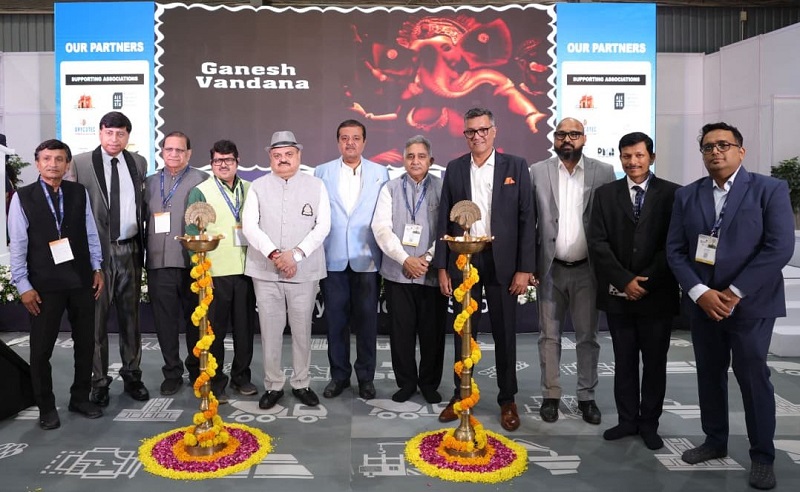
The expo inauguration witnessed the presence of distinguished policymakers, industry leaders and infrastructure stakeholders, reflecting the growing significance of the platform within India’s construction ecosystem. The inaugural ceremony was attended by Dr. L.P. Singh, Director General, National Council for Cement and Building Materials (NCB); Dr. Vishal Ramesh Thombare, Deputy Chief Engineer, Department of Roads, Municipal Corporation of Greater Mumbai; Mr. Ravindra Tyagi, National President, Builders’ Association of India (North Region); Mr. Hiranmay Mahanta, CEO, i-Hub Gujarat; Mr. Suyyog Kellusskar, Senior Director, IGS, 1Lattice; Mr. Yogesh Mudras, Managing Director, Informa Markets in India; and Mr. Rajneesh Khattar, Sr. Group Director, Energy & Construction Portfolio, Informa Markets in India, among other eminent guests.
Positioning NCB’s role in advancing sustainable and indigenous construction technologies, Dr. L.P. Singh, Director General, National Council for Cement and Building Materials, said, “India’s construction sector is set for unprecedented growth, with cement production expected to rise from nearly 500 million tonnes today to around 2,100 million tonnes by 2047 and 2,800 million tonnes by 2070. As this growth accelerates, sustainability, decarbonisation and indigenous development of construction materials must move in parallel. At NCB, our focus is on supporting the cement, concrete and building materials ecosystem through research, standardisation, testing, training, skill development and industry-linked innovation. The future of construction will depend on solutions that are not only green and sustainable, but also performance-driven and cost-competitive for real market adoption.”
Commenting on India’s evolving construction landscape,Mr. Suyyog Kellusskar, Senior Director, IGS, 1Lattice, said, “India is not just building faster, it is building differently. The country is in the middle of a structural construction super cycle, with construction GVA expected to more than double from ₹28 trillion today to ₹58.8 trillion by 2035, growing at an 8.6% CAGR. With government infrastructure capex of ₹11.21 lakh crore in FY26, rising urbanisation, a housing shortage of 31.2 million homes, and strong growth across RMC, precast concrete and construction chemicals, the opportunity ahead is both large and transformative. As India works towards its 2047 ambitions, faster adoption of mechanisation, advanced materials, RMC, precast solutions and technology-led execution will be critical to improving quality, timelines and sustainability across the construction ecosystem.”
Addressing the need for durable pavement solutions in a city with complex weather, traffic and topographical conditions, Dr. Vishal Ramesh Thombare, Deputy Chief Engineer, Department of Roads, Municipal Corporation of Greater Mumbai, said, “Mumbai’s road infrastructure has to withstand nearly 3,000–3,500 mm of annual rainfall, high-tide impact, continuous traffic movement and varied axle loads. Considering these conditions, the Municipal Corporation of Greater Mumbai has been steadily converting asphalt roads into concrete since 1989, with around 1,400 km of the 2,035 km road network already concretised. The use of concrete roads, white topping and concrete patching solutions is helping improve pavement durability, reduce water-related deterioration and address the pothole challenge in a sustainable way. Platforms like World of Concrete India 2026 are important as they bring together the right technologies, materials and industry knowledge to support more resilient and future-ready urban infrastructure.”
Highlighting the role of technology and mechanisation in transforming the construction sector, Mr. Ravindra Tyagi, National President, Builders’ Association of India, North Region, said, “The construction industry has witnessed a major shift from labour-intensive practices to technology-led and machinery-driven execution. Platforms like World of Concrete India are important as they expose builders and contractors to modern equipment that can improve speed, quality and project delivery. As India’s infrastructure and housing needs continue to grow, mechanisation, skilled operations and timely execution will be critical to building a stronger and more efficient construction ecosystem.”
Highlighting Gujarat’s innovation-led approach to strengthening the construction technology ecosystem, Mr. Hiranmay Mahanta, CEO, i-Hub Gujarat, said, “India has witnessed the rise of nearly 200,000 technology startups over the last decade, and construction technology and proptech are emerging as important areas for breakthrough innovation. At i-Hub Gujarat, we are connecting industry challenges with the strength of our academic ecosystem, comprising 100,000 faculty members and 2 million students, and supporting young innovators with grants of up to ₹50 lakh to solve real-world problems. Over the last seven years, this approach has helped create 11,000 enterprises from 2,500 colleges and 109 universities in Gujarat, along with 3,200 patent filings and 600 granted patents. Platforms like World of Concrete India can play a vital role in helping industry leaders, builders and startups collaborate, adopt new technologies, and accelerate India’s journey from ideas to market-ready construction solutions.”
Speaking on the growing opportunities emerging from India’s infrastructure and construction landscape, Mr Yogesh Mudras, Managing Director, Informa Markets in India said, “India’s construction industry is projected to reach nearly USD 1.4 trillion by 2030, positioning the country among the world’s largest and fastest-growing construction markets. This growth is being driven by sustained investments in transportation infrastructure, high-speed rail corridors, logistics and warehousing networks, industrial parks, urban redevelopment projects and emerging City Economic Regions that are reshaping the country’s economic and development landscape. As infrastructure projects become larger, more complex and increasingly focused on sustainability, the demand for advanced construction materials, digital technologies, automation and innovative building solutions continues to rise. World of Concrete India 2026 reflects this transformation by bringing together leading industry stakeholders, global expertise, cutting-edge technologies and strategic partnerships on a single platform, helping accelerate the delivery of smarter, more resilient and future-ready infrastructure that will support India’s long-term growth ambitions.”
World of Concrete India 2026 offers attendees a comprehensive showcase of product innovation, live technology demonstrations, and business engagement opportunities designed to address the evolving requirements of infrastructure, commercial construction, real estate, and industrial projects
Leading Indian and global enterprises including UltraTech Cement, JSW Cement, Sika India, Asian Paints, Kansai Nerolac Paints, Natural Cemeco, Mapei, Chryso India, Fosroc, Neptune Industries, Shree Premix Industries, Silicon Infratech, Himadri and Chryso Saint-Gobain, among others, are showcasing advanced solutions across the construction value chain.
Supported by leading industry associations and knowledge partners, the 12th edition of World of Concrete India 2026 has received the patronage of the Builders’ Association of India (BAI), the Drymortar Association, the Readymix Concrete Manufacturers Association (RMCMA), the India Concrete Institute and the Precast Manufacturers Association of India.
This industry momentum gains added relevance as the opening of World of Concrete India 2026 coincides with Global Exhibitions Day. The occasion reflects the continued role of exhibitions in moving sector-specific conversations beyond discussion, enabling ideas, technologies and market opportunities to translate into partnerships, adoption and measurable progress.