
“AI in real estate is no longer a future conversation”
“AI amplifies what it is given,” said Yann Leroy, Design Director, AXS Design. “Which means the quality of architectural thinking becomes even more important in an AI-driven world.”

For years, conversations around artificial intelligence and the future of real estate have largely been framed as future possibilities — technologies and systems that may eventually reshape how buildings are designed, planned, and delivered.
But a different reality is already beginning to emerge.
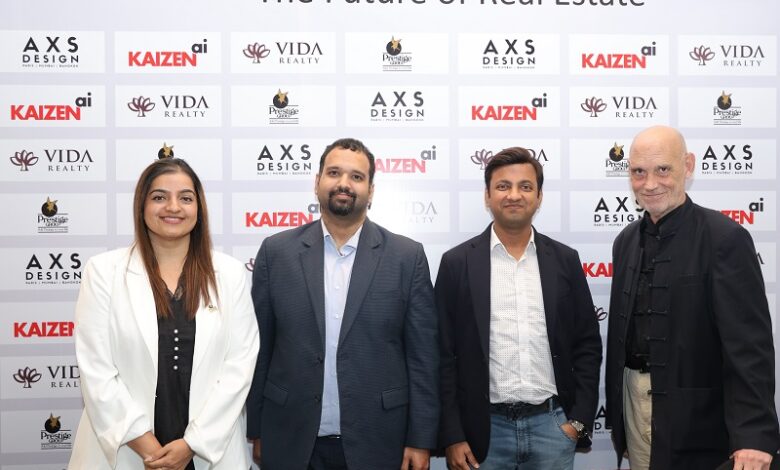
At a media interaction held in Mumbai this week, developers, architects, and technologists came together to discuss how AI is already being implemented across live real estate projects in India, Dubai, and the United States — not as a theoretical exercise, but as an operational reality influencing projects already under construction.
The discussion explored how artificial intelligence is beginning to fundamentally alter the way real estate decisions are made — enabling developers to evaluate hundreds of thousands of design possibilities across planning, parking, efficiency, cost, and constructability.
Traditionally, most projects are designed through a relatively linear process with limited iteration. AI-driven optimisation changes that equation completely, allowing projects to be explored and evaluated at a scale previously impractical within conventional workflows.
“What interested us was not discussing what AI may eventually do for real estate,” said Jay Shah, founder of Kaizen AI. “We wanted to talk about projects where these systems are already influencing real-world decisions today — on projects that are actively being built.”
Kaizen AI has worked across more than 200 projects globally, applying AI-led optimisation systems to large-scale developments across India, the Middle East, and the United States.
The session also highlighted a broader shift underway within the industry. Historically, most major technology transformations have tended to flow from West to East — imagined in Silicon Valley or global technology hubs before eventually being implemented elsewhere.
However, participants at the discussion pointed to a different pattern beginning to emerge in real estate, where some of these systems are now being actively developed and operationalised from India itself for projects across global markets.
Developers participating in the session shared how AI-driven optimisation is changing project economics, planning efficiency, and overall decision-making.
“The interesting part was not just optimisation,” said Harshvardhan Tibrewala, MD, Vida Realty. “It was the ability to evaluate possibilities at a scale that fundamentally changes how you think about a project. As a first-generation developer building larger and more ambitious projects, differentiation becomes extremely important — not just in terms of design, but in the overall offering and experience we create for customers. What was exciting was seeing how Kaizen AI and AXS approached the project together from completely different directions. One brought a level of intelligence and optimisation we had not experienced before, while the other brought a very differentiated design perspective. The combination allowed us to rethink both the economics of the project and the kind of product we ultimately wanted to bring to the market.”
Speaking about Prestige Group’s Jasdan project at Mahalaxmi, Nimisha Tambe, Sr AGM – Architecture, Prestige Group, said, “The entire exercise helped the company avail more out of what was already planned. I think developers must increasingly leverage technology to unlock profitability that cannot come from the human factor alone. Today, when construction costs are increasing and project timelines are seeing delays, efficient design can resolve many issues that arise during execution.”
The session also explored another consequence of AI — its impact on architecture itself.
As optimisation increasingly becomes automated, differentiated design thinking becomes even more valuable. This formed the basis for the introduction of AXS Design, an independent architecture platform bringing together global design talent and embedding it deeply within projects being executed from India.
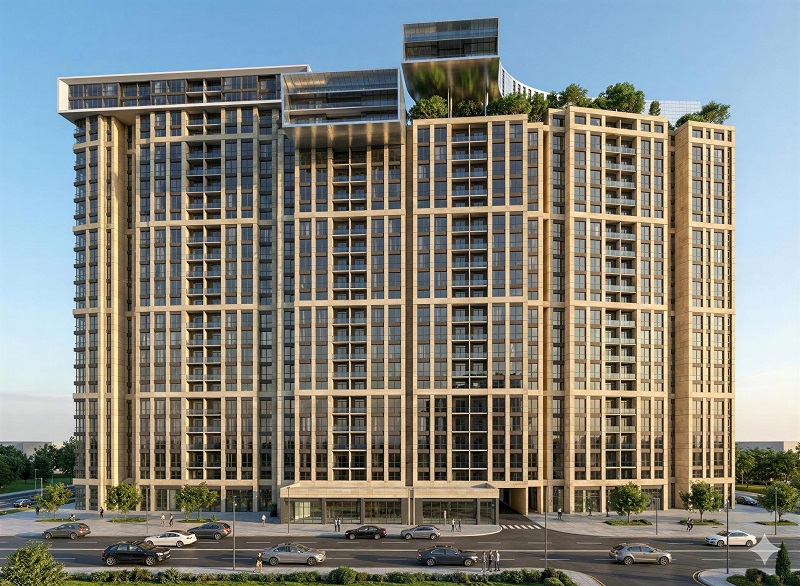
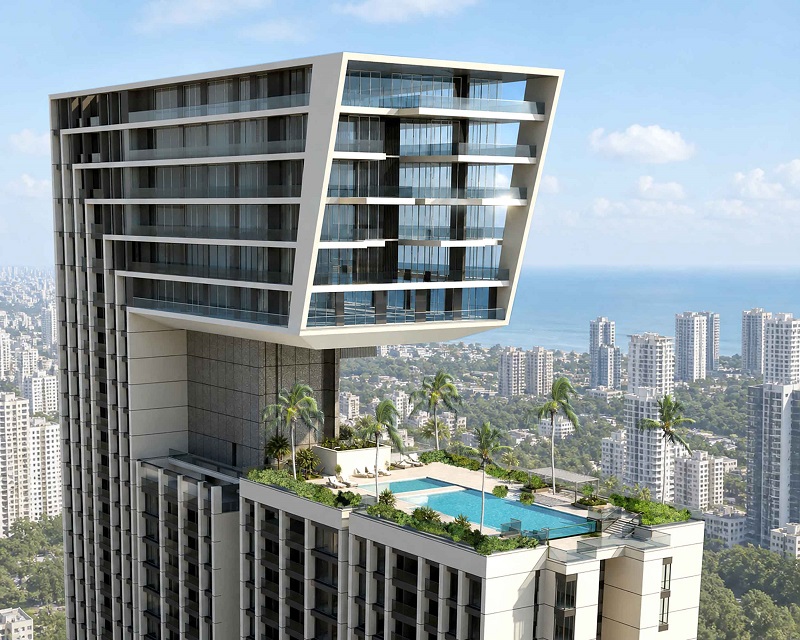
AXS presented two residential developments currently under construction in Mumbai, developed in collaboration with Vida Realty.
“AI amplifies what it is given,” said Yann Leroy, Design Director, AXS Design. “Which means the quality of architectural thinking becomes even more important in an AI-driven world.”
Yann Leroy also spoke about how many international cities and developers are often more open to experimentation and differentiated design approaches that contribute meaningfully to their skylines, while similar levels of architectural freedom can sometimes be more difficult to execute within Indian regulatory systems.
The discussion concluded with a broader observation: that Mumbai — because of its density, constraints, scale, and pace of development — is quietly becoming one of the most important testing grounds anywhere in the world for the future of real estate.
Not theoretically.
But through projects that are already under construction.

