
Unlocking New Ground for Real Estate Growth
"Inspira Realty is building its presence across Maharashtra’s evolving real estate landscape, with a strategy spanning residential and commercial redevelopment, industrial townships and plotted developments. From identifying emerging growth corridors in Chhatrapati Sambhajinagar to unlocking opportunities in Mumbai and exploring new destinations such as Alibaug, the company is focused on strategic acquisitions, disciplined execution and long-term value creation. Mr Om Ahuja, CEO, Inspira Realty, shares his perspective on the market opportunities, business decisions and growth priorities shaping the company's journey."

Identifying a growth market requires us to look beyond current demand and understand the economic activity that will drive growth over the next decade. We evaluate infrastructure development, connectivity, industrial and commercial investments, employment generation, population movement and the potential for a wider residential ecosystem to develop around these factors.
In Mumbai, the opportunity extends beyond emerging micro-markets to the redevelopment potential of established locations, including South Mumbai. With limited availability of vacant land, redevelopment offers a significant opportunity to unlock the value of existing urban assets and create contemporary residential and commercial spaces in established neighbourhoods. We look at the location, feasibility of redevelopment, demand for the end product and our ability to navigate the complexities of execution before evaluating such opportunities.
Our experience in Chhatrapati Sambhajinagar is another example of this approach. Our 232-acre industrial township and residential plotted development have both received an encouraging response, reinforcing our conviction in the region’s potential as an industrial and real estate growth centre.
Ultimately, our approach is to identify markets where infrastructure, economic activity and genuine end-user demand converge. Whether it is redevelopment in Mumbai or industrial and residential development in emerging markets across Maharashtra, we focus on acquiring strategically, executing with discipline and creating long-term value.
2. Chhatrapati Sambhajinagar has been a key growth market for Inspira. What has your experience with the 232-acre industrial township taught you about the region’s evolving industrial and real estate potential?
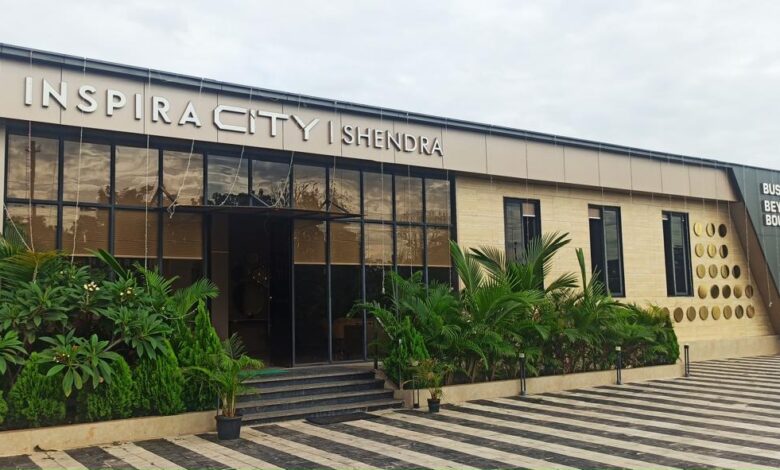
Our experience in Chhatrapati Sambhajinagar has been extremely encouraging. Our 232-acre industrial township, Inspira City, in Shendra is almost sold out. Our residential plotted development in the region has also received a strong response and is 100% sold out. Together, these developments have reinforced our belief that the region is evolving into an important industrial and real estate growth centre.
Shendra’s connectivity to the Samruddhi Mahamarg and its position within the broader Delhi-Mumbai Industrial Corridor add to the region’s industrial potential. What is particularly interesting is that the opportunity extends beyond industrial land. As businesses establish themselves and economic activity expands, demand can emerge for residential communities, plotted developments and supporting infrastructure.
Building on this experience, we are pursuing additional land parcels in Chhatrapati Sambhajinagar in Shendra and Bidkin for plotted developments. Our intention is to build on the success of our existing projects and participate in the region’s next phase of growth.
For us, the opportunity lies in developing an integrated portfolio that responds to the needs of a growing economic centre, rather than viewing industrial and residential real estate as separate markets.
3. With Inspira One representing the company’s presence in the luxury real estate segment, how do architecture and design help differentiate a project in an increasingly competitive market, and what are today’s homebuyers looking for in a luxury development?
At Inspira Realty, we believe luxury is defined by the thought that goes into every aspect of a home, from its architecture and interiors to the way spaces function in everyday life. Today’s discerning homebuyers are looking beyond the address and specifications. They value thoughtful planning, privacy, functionality, sustainability and a living experience that combines global design sensibilities with local context.
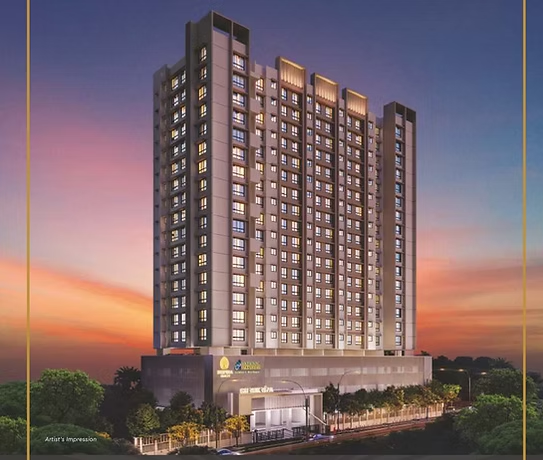
Inspira One at Bandra Bay, offering luxurious 3 and 4 Bed residences reflects this philosophy. The project brings together international expertise across architecture, façade, interiors and landscape design. AXS Design, led by French Architect Yann Leroy, has drawn inspiration from Mumbai’s Art Deco legacy to create a contemporary yet timeless architectural identity. Studio HBA, the boutique arm of Hirsch Bedner Associates, has designed the project interiors that reflect Bandra’s cosmopolitan character, while Site Concepts International Inc. has integrated landscape planning with nature, wellbeing and sustainability.
Equally important is how design translates into everyday living. Inspira One offers residences with expansive private decks, alongside amenities such as a rooftop infinity-edge pool, business centre, spa, salon, kids’ club and more. Amenities are planned across dedicated spaces on the podium and rooftop, helping preserve privacy within the residences while enhancing the overall living experience.
Our design vision, is rooted in bringing international design excellence into a context that feels relevant to Indian homebuyers. Ultimately, we believe a luxury development must go beyond visual appeal to offer lasting value, functionality and a distinctive identity that stands the test of time.
4. Alibaug and Karjat are emerging as important growth corridors around the Mumbai region, with growing demand for second or holiday homes. How do you see infrastructure development and improved connectivity shaping the real estate potential of these markets, and is Inspira planning to enter this space?
We see significant long-term potential in the growth corridors around Mumbai. Infrastructure developments, including the Navi Mumbai International Airport and improvements in regional connectivity, are expected to influence how people travel, invest and choose their homes. As accessibility improves, markets such as Alibaug can become increasingly attractive for second homes, holiday homes and plotted residential developments.
However, the long-term potential of these markets will depend on more than infrastructure alone. The availability of supporting amenities, the quality of connectivity, the nature of buyer demand and the suitability of individual locations will be equally important.
At Inspira Realty, we are exploring plotted development in Alibaug. This builds on our experience in plotted development in Chhatrapati Sambhajinagar, where our existing residential plotted project is 100% sold out.
We believe plotted development can offer an attractive proposition in emerging markets when supported by the right location, planning and infrastructure. Our focus is on identifying opportunities that have the potential to deliver sustainable value as these destinations evolve.
5. Mumbai continues to remain central to Inspira’s strategy, with a strong focus on commercial real estate. What is driving your confidence in Mumbai’s commercial segment, and what opportunities are you currently evaluating?
Mumbai remains central to our growth strategy because of its role as a financial and business centre, its concentration of corporate activity and the continued demand for quality commercial spaces. In fact at 10.7 million sq. ft., Mumbai recorded it’s best ever half-year office leasing in H1 2026. We are seeing an increasingly sophisticated occupier market, where businesses place importance on location, connectivity, building quality and the overall efficiency of their workplaces. Demand is also creating opportunities beyond traditional commercial districts, across emerging micro-markets.
This gives us confidence in the long-term potential of well-located commercial real estate in Mumbai. For us, the opportunity lies in identifying assets and locations where redevelopment can unlock value and create contemporary commercial spaces suited to evolving occupier requirements.
We are actively evaluating and acquiring opportunities in this segment, with multiple large-scale commercial redevelopment projects across Mumbai expected to be announced shortly. Our ambition is not simply to increase our project count, but to build a portfolio of strategically located, high-quality assets that can become landmark developments in their respective markets.
6. With redevelopment becoming an increasingly important part of Mumbai’s real estate landscape, how are customer and occupier expectations changing, and what does this mean for developers?
Redevelopment is becoming an increasingly important part of Mumbai’s real estate landscape because it offers a way to unlock the potential of established urban locations where developable land is limited. The scale of activity reflects this shift as industry figures indicate that Mumbai continues to record year-on-year growth in redevelopment agreements being signed up.
At the same time, customer and occupier expectations are evolving. Homebuyers are increasingly looking for better layouts, privacy, amenities, construction quality and efficient use of space. Commercial occupiers place greater emphasis on connectivity, modern infrastructure and workplace functionality.
For developers, this means redevelopment must be approached as more than a construction exercise. It requires a strong understanding of stakeholder expectations, careful project planning, financial discipline and the ability to deliver what has been promised. In Mumbai, managing the complexities of existing buildings, approvals and multiple stakeholders makes execution capability especially important.
Our experience across residential redevelopment has reinforced the importance of getting these fundamentals right. We believe successful redevelopment should create better living and working environments while delivering long-term value to both residents and the surrounding neighbourhood.
7. Inspira has achieved five Occupancy Certificates in less than five years. What have been the key learnings from an execution and project-delivery perspective as the company has scaled?
Achieving five Occupancy Certificates in less than five years has been an important milestone for us. It reflects our focus on execution and our commitment to taking projects from planning to delivery. For a growing real estate company, the ability to execute consistently is fundamental to building credibility with customers and other stakeholders.
One of our key learnings has been the importance of disciplined planning from the very beginning. Land acquisition, project design, approvals, financial planning, construction and delivery must work together as part of a coordinated process. Strong project monitoring, clear accountability and timely decision-making are equally important as the scale of operations increases.
Our experience in Mumbai has also been encouraging, with four of our seven residential redevelopment projects fully sold out. This gives us confidence in our understanding of customer requirements and our ability to create products that resonate with the market.
As we expand into larger commercial developments and additional land-led projects, our focus remains on maintaining the same discipline. Growth is meaningful only when it is supported by the ability to deliver quality projects and create lasting value.
8. As Inspira expands across residential redevelopment, industrial townships, plotted development and commercial real estate, how do you maintain a common approach to evaluating risk, demand and long-term value across these segments?
While each real estate segment has its own dynamics, our underlying approach remains consistent. We evaluate the strength of the location, the demand drivers, the quality of the underlying asset, development feasibility, capital requirements and the potential to create long-term value. We also consider acquisition costs, execution complexity, approvals and delivery timelines before committing to an opportunity.
The application of these principles varies by segment. In residential redevelopment, stakeholder alignment, customer preferences and project feasibility are critical. For industrial townships, we focus on industrial demand, connectivity, infrastructure and the suitability of land for business use. In plotted development, accessibility, location and the evolution of the surrounding ecosystem play an important role. Commercial real estate requires a clear understanding of occupier demand, asset quality and long-term commercial viability.
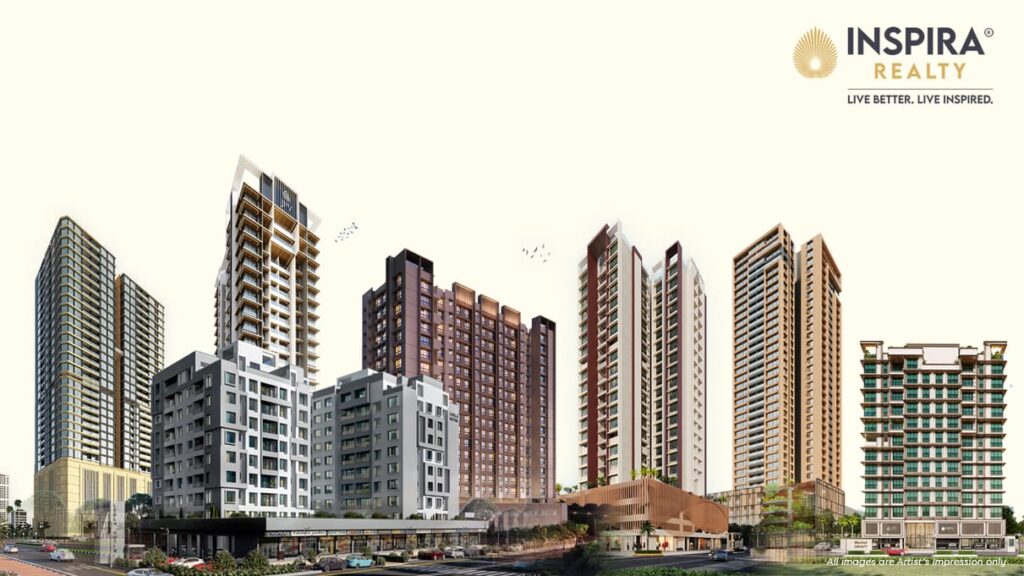
Our current portfolio of 10 ongoing projects, spanning over 5 million sq. ft., reflects our ability to participate in different real estate segments while maintaining a common focus on disciplined execution.
Our expansion into additional industrial and plotted developments in Chhatrapati Sambhajinagar, along with our planned plotted development in Alibaug and our growing commercial ambitions in Mumbai, follows this approach. Diversification, for us, is not about pursuing every available opportunity. It is about identifying complementary growth drivers and investing where we believe we can create sustainable value.
9. Looking ahead over the next five to ten years, which structural changes do you believe will shape Maharashtra’s real estate landscape, and where does Inspira see its biggest growth opportunities?
Over the next five to ten years, we believe Maharashtra’s real estate landscape will be shaped by infrastructure-led development, the expansion of industrial centres, the continued transformation of Mumbai’s urban landscape and the emergence of new growth corridors beyond established markets.
Improved connectivity will influence where businesses invest and where people choose to live, while industrial expansion will generate demand for residential development and supporting infrastructure. In established urban centres such as Mumbai, redevelopment will remain an important avenue for unlocking land potential and creating contemporary living and working spaces. Meanwhile, destinations around Mumbai, including Alibaug, are likely to benefit from improved connectivity and growing interest in plotted developments and lifestyle-led investments.
For Inspira Realty, these trends translate into clear areas of focus. In Chhatrapati Sambhajinagar, we are looking to expand through additional land parcels for industrial and residential plotted developments. We are also planning to launch a plotted development in Alibaug, while continuing to pursue residential and commercial redevelopment opportunities in Mumbai.
Our ambition is to build a diversified real estate platform by identifying emerging markets early, acquiring strategically and executing with discipline. We want to participate in Maharashtra’s next phase of growth by creating developments that respond to genuine demand and deliver long-term value.

